Addiction Hypnotherapy: A Trauma-Informed Approach
Close your eyes and picture an addict, Cormac Colleran asked his HypnoConnect audience. Most people picture someone who's lost everything, homeless, unraveling, out of options. The clients who actually walk into a private hypnotherapy practice, he said, almost never look like that. They're people with respectable jobs and full lives who happen to have a compulsive behavior around alcohol, cocaine, painkillers, gambling, or their phone that's gotten steadily worse and that they don't want documented in a rehab intake file or a support-group sign-in sheet.
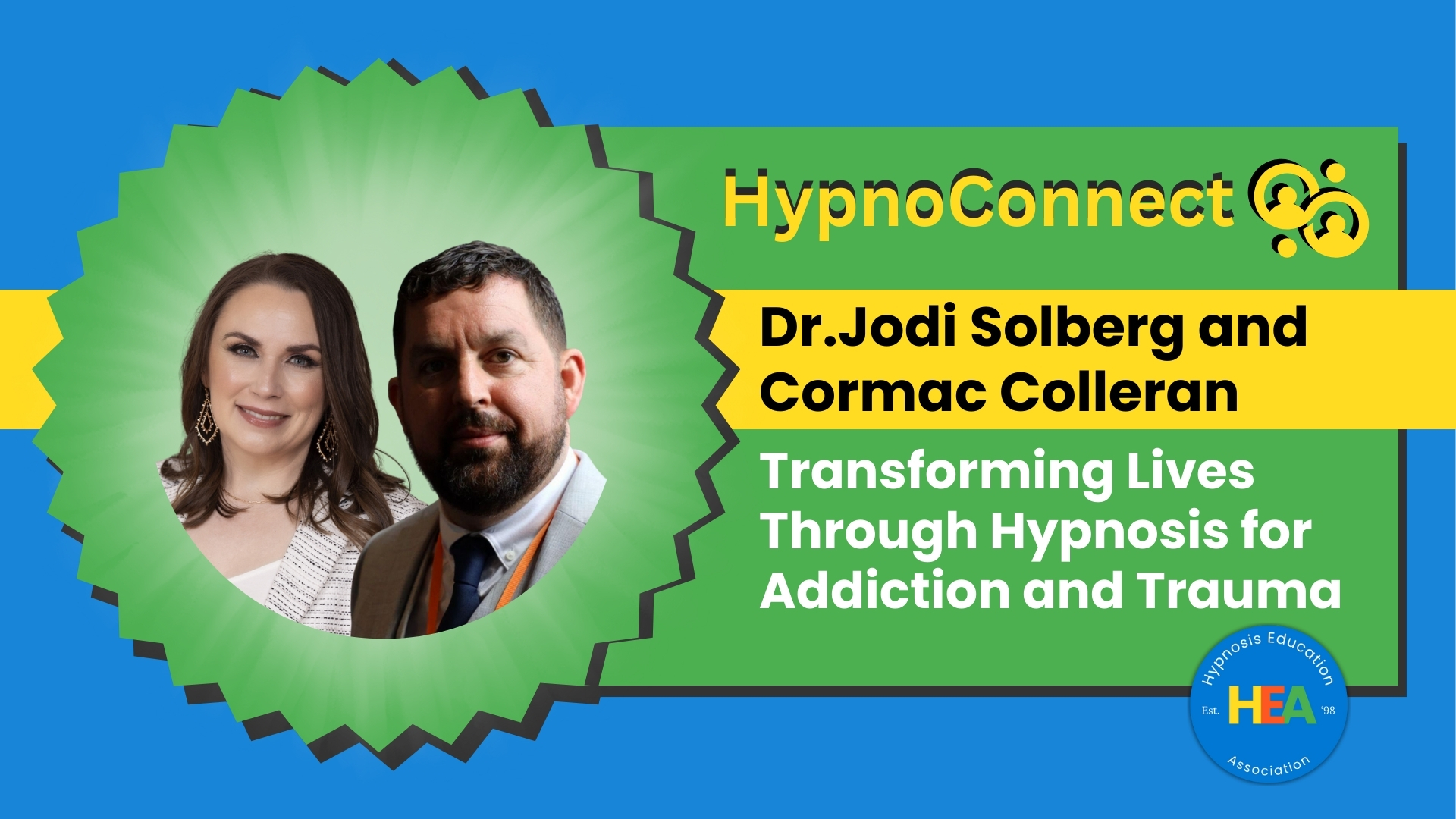
Colleran, founder of Results Focused Hypnosis in Dublin, and Dr. Jodie Solberg, founder of Psyched Up Success in Washington state, joined the conversation to lay out the combined framework they've built, his solution-focused techniques paired with her trauma-informed approach, for working with exactly these clients.
The Addiction Is the Solution, Not the Problem
The two presenters returned repeatedly to one reframe: a client's addiction isn't the core problem to be eliminated. It's a solution their subconscious mind built, at some point, to manage a need it didn't have a better way to meet. Solberg described a client who began medicating unprocessed feelings with marijuana while parenting a toddler and healing from past trauma; Colleran described a woman whose emotional eating traced back to a single childhood memory of falling from a tree and choosing to comfort herself rather than call for a parent who wasn't reliably available.
Why "Just Remove It" Doesn't Work
Colleran calls this the whack-a-mole problem: resolve a smoking habit without addressing what's underneath it, and the same underlying need often resurfaces as a different compulsion, sugar, alcohol, screen time. Solution-focused technique can end a specific behavior quickly; trauma-informed work is what keeps a new one from taking its place.
Validating the Coping Strategy
Rather than asking a client to see their addiction as evidence they're broken, both presenters work to help clients recognize that the underlying part of themselves responsible for the behavior had a positive intent, it was trying to change how they felt, protect them, or help them survive something. Solberg draws on Dr. Gabor Maté's reframing here: the useful question isn't "why the addiction," but "why the pain." Once a client can separate the intent (protection, comfort, escape) from the strategy (a destructive habit), Colleran says, much of the shame lifts, and the subconscious becomes more willing to negotiate a better strategy.
Naming and Befriending the Part
Colleran described inviting a client to name the part of herself responsible for a compulsion, then helping her "befriend" that part rather than fight it, acknowledging its job was never malicious, only misguided, before asking it to find a new way to meet the same need.
Language That Sets Up Change Before the Client Ever Sits Down
Both presenters treat the first phone call as clinical work in its own right. Colleran uses embedded commands with a downward, declarative intonation ("those who quit with me find it feels like they were never a smoker in the first place") delivered inside ordinary sentences. He also asks new clients directly what makes them ready now, since answers reveal whether someone is intellectually willing but not yet emotionally ready, an important distinction before booking a session.
Reframing the Real Choice
Rather than asking why someone wants to quit, Colleran reframes the conversation around what they're actually choosing: not giving something up, but choosing their health, their family, and their future. Because the subconscious resists loss but pursues gain, this reframe builds urgency instead of resistance.
Regulating the Nervous System: Thermostat, Not Thermometer
Solberg teaches clients, and encourages practitioners to model, the difference between being a thermostat, which holds a comfortable internal range and self-corrects when triggered, and a thermometer, which simply reacts to whatever is happening around it. Since practitioners co-regulate with clients' nervous systems in session, learning to stay a thermostat is foundational both to client outcomes and to a practitioner's own capacity to hold difficult material.
Hijacking the Trance State Already in Motion
Colleran frames a craving itself as a hypnotic state: a moment when emotion overrides logic, built from a familiar trigger-response pattern. Rather than trying to talk a client out of that state from the outside, he works within it, pausing the sequence before the point of use, guiding the client into an observer perspective on their own behavior, reconnecting them with what they actually want, and then directing them back into their body toward a different response. Repeated several times within a session, he says, the old pattern starts to feel outdated rather than compelling.
Making Consequences Personal, Immediate, and Certain
One attendee raised the PIC formula, the idea that people sustain harmful behavior because consequences feel like they'll happen to someone else (not personal), far in the future (not immediate), or might not happen at all (not certain). Colleran connected this to why simply telling a smoker "this could kill you" rarely works: the goal isn't logical persuasion, since clients already know the facts, but helping them connect emotionally to a specific, felt future.
Working Within Scope of Practice
Both presenters were direct that hypnotherapists need to know their state's regulations before positioning addiction work publicly, several states restrict language that implies licensed therapy or treatment. Their guidance: describe the work as helping clients change habits of thought, feeling, and behavior, refer out for medical detox or licensed treatment when physical dependency is present, and build a referral relationship with a broader care team rather than working in isolation. This is exactly the kind of practical, scope-aware training covered through HEA's continuing hypnosis education opportunities.
Key Takeaways for Practitioners
Treat a client's addiction as evidence of a coping strategy their subconscious built, not as a character flaw, and say so to the client directly.
Resolving the presenting behavior without addressing underlying trauma risks the "whack-a-mole" problem: a new compulsion replacing the old one.
Small language choices on the very first call, embedded commands, reframing the "real choice", shape a client's readiness before the first session even starts.
The PIC formula (Personal, Immediate, Certain) explains why factual warnings alone rarely change behavior.
Know your state's scope-of-practice rules before describing addiction work publicly, and build referral relationships for cases involving physical dependency.
Conversations like this one are exactly why so many practitioners stay active in the HEA community between sessions.
Join the next HypnoConnect conversation and bring your own questions to the room: Register for HypnoConnect
Frequently Asked Questions
Is addiction hypnotherapy the same as addiction treatment or therapy?
No. Colleran and Solberg both emphasize working within scope of practice, helping clients change habits of thought, feeling, and behavior, rather than using clinical or treatment language that may be restricted in a given state, and referring out for licensed treatment when appropriate.
How many sessions does this approach typically take?
Colleran describes a typical three-session protocol for most addictions, a one-session approach for smoking specifically, and a longer five-session protocol when deeper trauma resolution is also the goal.
What if a client isn't ready to change, even if a family member wants them to be?
Both presenters note that readiness has to come from the client, though family members supporting someone with addiction can still get real value from coaching on their own nervous-system regulation and boundaries.
Is it safe to work with clients who may have physical dependency, like alcohol?
Both presenters stressed caution here: physical dependency (particularly alcohol) can carry real medical risk during withdrawal, and they recommend referring clients to a doctor or a broader care team rather than working with dependency-level cases in isolation.
What is the "whack-a-mole" problem in addiction work?
It's Colleran's term for what happens when a specific addictive behavior is resolved without addressing the underlying trauma or unmet need driving it, the same need often resurfaces as a different compulsion.
Where can practitioners learn this combined framework?
Colleran and Solberg have founded the SFTI (Solution Focused, Trauma Informed) Hypnosis Academy, with in-person and online training options; check their academy site for current dates and locations before enrolling.
Dr. Jodie Solberg is a member of the Hypnosis Education Association. Visit psychedupsuccess.com or find her in our member directory.


