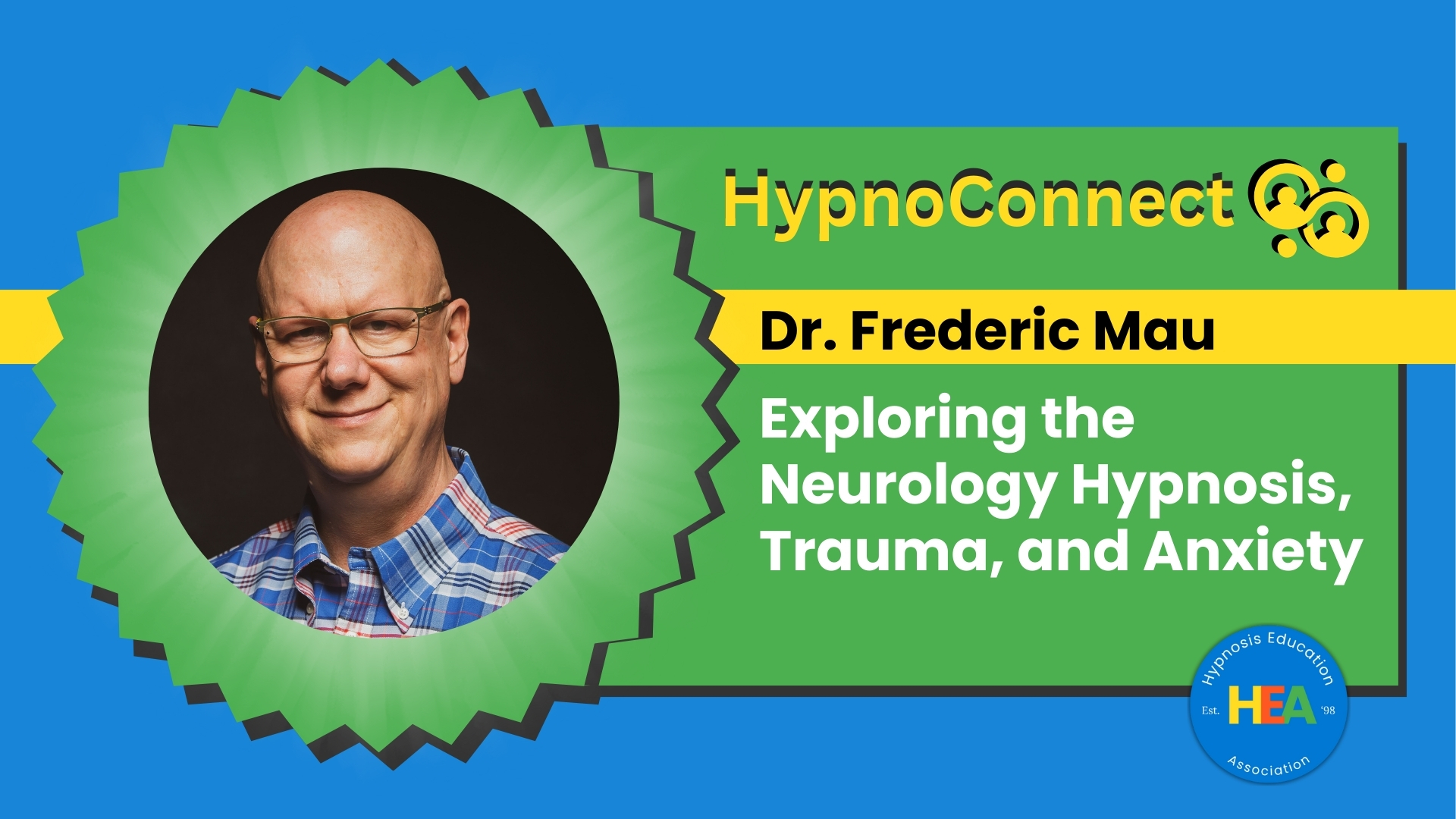
Exploring the Neurology of Hypnosis, Trauma, and Anxiety with Dr. Frederick Mau
In the world of hypnosis, few voices carry as much weight and insight as that of Dr. Frederick Mau. As a clinical mental health counselor and owner of Watermark Counseling, he has dedicated his career to bridging the gap between hypnosis and neuroscience. In a recent HypnoConnect session hosted by the Hypnosis Education Association, Dr. Frederick Mau delivered a captivating presentation titled "The Neurology of Hypnosis, Trauma, and Anxiety."
Watch the Full Session
The event drew participants from around the globe, sparking lively discussions on how hypnosis interacts with the brain to address deep-seated issues like trauma and anxiety. This blog post dives deep into the session, unpacking Dr. Mau's key insights, the neurological underpinnings of hypnosis, and the practical applications for therapists and enthusiasts alike. Whether you are a seasoned hypnotist or new to the field, the points raised here highlight why hypnosis is not just an art but a scientifically grounded tool for healing.
Setting the Stage: HypnoConnect and Its Mission
The session began with a warm welcome and an introduction to the mission of the Hypnosis Education Association: to educate professionals and the public on the benefits of hypnosis, dispel misconceptions, and promote ethical practices across the field. The association's annual online conference, continuing education units, and monthly press releases on the positive uses of hypnosis were all highlighted as part of this ongoing mission.
Dr. Frederick Mau was introduced with well-deserved praise for his credentials. He has taught hypnosis to psychiatrists on a medical faculty, served as a clinical investigator in a randomized trial for hypnotic pain relief, and delivered keynote speeches at conferences worldwide. He is a recipient of numerous awards and has authored influential books. His upcoming contribution to the fifth edition of Essential Psychopathology and Its Treatment, a standard medical textbook for psychiatrists, includes an entire section on hypnosis and expansions on general psychotherapy.
The atmosphere was casual and genuinely collaborative, encouraging questions throughout and blending education with real-world application. It is the kind of environment that the HEA member community has come to expect from every HypnoConnect gathering.
The Paddle Tale: A Symbolic Start to Neurological Insights
Before diving into slides, Dr. Mau shared a light-hearted story about a unique paddle in his office, a Native American motif featuring a rabbit smoking a pipe on one side and a panther on the other. He explained its significance: the rabbit represents being at peace, ease, and comfort, knowing it is smarter than the panther lurking behind.
This artifact ties directly into his work on smoking cessation but also symbolizes the clever navigation of the mind in hypnosis, outsmarting fears and anxieties rather than confronting them head-on. The anecdote served as a perfect icebreaker, transitioning smoothly into the core presentation. Dr. Mau emphasized that while the session would cover technical neurology, his goal was to make the science accessible to everyone in the room.
Hypnosis vs. Waking State: What Brain Scans Reveal
One of the session's most foundational points was the neurological distinction between hypnosis and ordinary waking-state behavior. Dr. Mau illustrated this with examples like full-body catalepsy, describing how he once hypnotized someone and leaned them back until they lay flat and rigid, something physiologically impossible in a fully conscious waking state without bending.
Dr. Mau stressed that hypnotic phenomena like arm rigidity or paralysis look identical to waking compliance to untrained observers, but they activate entirely different brain regions. Drawing from published studies, he explained the key distinctions:
Brain Activity: Hypnosis vs. Waking State
Waking rigidity activates the prefrontal cortex and right posterior cortical structures.
Hypnotic paralysis engages the orbital cortex, cerebellum, thalamus, and putamen instead.
In hypnosis, the motor cortex "pre-activates" but then drops off, producing the distinct sensation of trying but being unable to move, feeling unconscious and automatic.
Brain scan comparisons show that hypnosis activates unique areas, confirming it is a genuinely distinct neurological state.
This led to a key takeaway: hypnosis is not mere compliance or role-playing. Dr. Mau firmly debunked the outdated debate on whether hypnosis constitutes a "state," affirming that modern neuroimaging research confirms it operates in a fundamentally different way in the brain. This has profound implications for therapeutic applications. Learning about this research is exactly what the Hypnosis Education Opportunities offered through HEA are designed to support.
Unraveling Hypnotizability: Brain Connections and Genetic Ties
Dr. Mau delved into the science of hypnotizability, noting that behavioral measures like the Stanford Scale, Harvard Group Scale, and Hypnotic Induction Profile have existed for decades. Brain scans now reveal something even more fascinating: highly hypnotizable people show greater functional connectivity between the prefrontal cortex and the salience network, particularly the anterior cingulate cortex, the region central to survival, fight-or-flight, anxiety, and post-traumatic responses.
In hypnosis, this connection actually decouples. Frontal lobe activity reduces while the anterior cingulate and prefrontal cortex increase activity independently. Dr. Mau explained that highly hypnotizable individuals have these regions firing synchronously at baseline, but hypnosis separates them, creating the window needed to rework trauma and anxiety responses. In PTSD flashbacks, these regions fire together in an overwhelming loop. Hypnosis pulls them apart and enables meaningful change.
Dr. Mau also tied this to why highly hypnotizable people tend to be more prone to clinical post-traumatic responses. The same efficient frontal-limbic connection that makes someone highly hypnotizable can amplify trauma if left unchecked. Hypnosis uniquely leverages this same brain functionality to heal what it helped create, a genuinely remarkable insight. This is the kind of neuroscience-informed perspective that the Hypnotes Newsletter brings to practitioners through every issue.
Hypnosis and Mental Health Disorders: A Perfect Match?
A major highlight of the session was Dr. Mau's exploration of the correlation between hypnotizability and specific diagnoses. High scores on hypnotizability scales link directly to post-traumatic disorders, functional neurological disorders such as psychogenic seizures, and anxiety-related conditions.
Dr. Mau shared a compelling case: a 12-year-old presenting with psychogenic seizures was treated successfully with hypnosis, with symptoms eliminated in just three sessions.
He also noted meaningful patterns within the DSM-5: individuals with schizophrenia tend to have low hypnotic capacity, while those with dissociative identity disorder have the highest. This makes hypnosis particularly well-suited for trauma, anxiety, unipolar depression, functional neurological disorders, and dissociative presentations.
DSM Categories Where Hypnosis Shows Particular Strength
Trauma and stressor-related disorders
Anxiety disorders
Depressive disorders
Somatic symptom and related disorders
Dissociative disorders
Functional neurological disorders
Dr. Mau's key clinical insight: when a client presents with anxiety or trauma, he does not need to formally test hypnotizability. The diagnosis itself implies capacity. This empowers therapists enormously, as hypnosis effectively targets the majority of common mental health presentations. The HEA's ethical guidelines support practitioners in applying this kind of evidence-informed approach responsibly.
The Recipe for Therapeutic Change: Hypnosis as a Fast-Track Tool
Shifting to the mechanics of psychotherapy itself, Dr. Mau referenced a 2015 article outlining three essentials for lasting therapeutic change: reactivate old memories, engage new emotional experiences for reconsolidation, and reinforce them through repetition. Hypnosis, he argued, excels at all three.
Unlike advice-giving therapies, hypnosis uses visualization to reinforce new experiences rapidly and at a deeper neurological level. Dr. Mau advocates a solution-focused approach rooted in the tradition of Milton Erickson, prioritizing how a client wants to feel and respond in the future rather than dwelling on past origins. This aligns naturally with hypnosis's unconscious, automatic quality, making it particularly effective for embedding lasting change.
Debunking Myths: State Theories and Genetic Inheritability
Dr. Mau briefly addressed the long-standing state versus non-state debate in hypnosis research. Non-state theorists argue that hypnosis is simply role-playing or social compliance, but neuroimaging now firmly disproves this position. Hypnosis produces unique and measurable brain activity that cannot be replicated through conscious compliance alone.
Perhaps the most groundbreaking revelation of the session was this: hypnotizability is genetically inheritable. It can now be tested using an affordable kit, with the COMT gene serving as the key predictor. Dr. Mau cited research showing that individuals with this genetic profile experience higher post-surgery pain and reduced opioid efficacy, but also that hypnotic pain relief works particularly well for them. He recommended that hospitals consider genetic screening pre-surgery, offering hypnosis as a targeted alternative to opioids for patients who carry this profile.
Pain Relief Revolution: Hypnosis as Best Practice
Dr. Mau placed strong emphasis on hypnosis's expanding role in pain management. A 2019 HHS report identifies hypnotherapy, biofeedback, and relaxation training as psychophysiological approaches that actually change the pain experience itself, not simply how a patient copes with it. Hypnosis is now recognized as the standard of care and best practice for pain treatment in this context.
"Hypnosis does not heal the body. It fine-tunes awareness, removing unnecessary pain while preserving the survival signals that protect us."
Dr. Mau explained the mechanism: pain is a higher cortical registration of limbic signals. Hypnosis works by "fuzzing" the thalamic gateway, reducing the brain's unnecessary amplification of pain while keeping protective responses intact. He demonstrated this with a striking example: when a palm is numbed hypnotically, a person can still feel their fingertips but not a pinch on the palm, a result that defies ordinary nerve logic and builds considerable credibility with medical professionals.
He also raised important warnings about the co-prescribing of opioids and benzodiazepines across medical disciplines and emphasized the critical need for better interdisciplinary communication to protect patients. Positioning hypnosis as a science-backed, non-addictive alternative is a message the Hypnosis Education Association actively promotes through its public outreach work.
Practical Applications and Ethical Questions
The interactive portion of the session was rich with practitioner questions. Dr. Mau addressed how high prefrontal-limbic connectivity confirms hypnotizability, making those clients ideal candidates for hypnotherapy targeting anxiety and trauma. He also offered practical guidance for practitioners facing clinical resistance:
Build rapport before introducing hypnosis; frame it as "guided imagery" for skeptical clients or medical referrals
For OCD presentations, hypnosis is highly appropriate due to the shared anxiety-based brain patterns
For pain modality work, shift from kinesthetic to visual or auditory processing using targeted techniques from his books
Dr. Mau also raised a compelling ethical question: should individuals in high-risk professions be genetically screened for PTSD vulnerability before entering those careers? The COMT gene test could identify who is most at risk, prompting early protective intervention. He shared an additional application: hypnosis has been observed to temporarily reduce Parkinson's motor movements, a finding with meaningful implications for quality-of-life work.
He also extended an invitation to his upcoming five-weekend clinical certification course in January, designed for practitioners who want to deepen their understanding of the neuroscience behind hypnosis and apply it at a clinical level. These kinds of advanced learning opportunities complement what is available through HEA's Hypnosis Education Opportunities.
Wrapping Up
As the session drew to a close, Dr. Mau was thanked warmly for what was a genuinely illuminating presentation. The next HypnoConnect session was announced, with a focus on incense appreciation in hypnosis and its synergy with sound healing.
Non-members were invited to join HEA for just $55, which includes full conference access, session replays, and a directory listing for your practice. Volunteers were also welcomed across a range of initiatives including medical education outreach and event coordination.
In conclusion, Dr. Mau's HypnoConnect session illuminated hypnosis's neurological power in a way that is rarely made accessible. From decoupling brain regions to genetic predictors and evidence-based pain management, it is clear that hypnosis heals by harnessing the mind's own innate mechanisms.
Ready to Dive Deeper?
Join us for the next HypnoConnect session and connect with experts like Dr. Frederick Mau, ask your questions live, and expand your hypnosis knowledge in a welcoming global community.
Register for the next HypnoConnect session and learn from leading voices in hypnosis and neuroscience
Join HEA as a member for $55 and unlock session replays, conference access, and your practitioner directory listing
Explore Hypnosis Education Opportunities to continue building your neuroscience-informed practice
Apply to speak at a future HEA event and share your expertise with a global community of practitioners
🎙️
Prefer to listen on the go?
Catch this session as a podcast episode. Listen to Dr. Frederick Mau's full HypnoConnect session on Podbean and take these neurological insights with you wherever you are.
Frequently Asked Questions
1. Is hypnosis a real neurological state or just compliance?
Hypnosis is a genuine and distinct neurological state. Brain scans show it activates entirely different regions than waking behavior, including the orbital cortex, cerebellum, thalamus, and putamen, definitively settling the state versus non-state debate. Explore HEA's education resources to go deeper into the neuroscience behind hypnosis.
2. Why are highly hypnotizable people more prone to trauma and anxiety?
Highly hypnotizable individuals have stronger connectivity between the prefrontal cortex and the anterior cingulate cortex, the brain's survival and stress center. This same efficient connection amplifies traumatic experiences but also makes hypnosis a powerful healing tool for those same responses. HEA's HypnoConnect events explore practical applications of this neuroscience regularly.
3. Which mental health conditions respond best to hypnotherapy?
Hypnotherapy works best for PTSD, anxiety, dissociative disorders, functional neurological disorders, depressive disorders, and somatic symptom disorders. Dr. Mau notes that a diagnosis of anxiety or trauma itself implies sufficient hypnotizability, removing the need for formal pre-screening. The HEA Code of Ethics supports responsible, evidence-informed application across these presentations.
4. Can hypnosis actually reduce pain, and is it recognized as best practice?
Yes. A 2019 HHS report recognizes hypnotherapy as the standard of care for pain management, noting it changes the pain experience itself rather than simply improving coping. Hypnosis works by reducing unnecessary pain amplification at the thalamic gateway while preserving protective responses. The Hypnotes Newsletter covers hypnosis in medical settings regularly.
5. Is hypnotizability genetic and can it be tested?
Yes. Hypnotizability is genetically inheritable and linked to the COMT gene, which can now be identified through an affordable test. Individuals with this profile experience higher post-surgery pain and reduced opioid efficacy but respond exceptionally well to hypnotic pain relief. Join a future HypnoConnect session to hear more cutting-edge clinical research like this firsthand.
6. How should hypnotherapists introduce hypnosis to skeptical or medically referred clients?
Dr. Mau recommends framing hypnosis as "guided imagery" to reduce resistance with skeptical or medically referred clients. Sharing neuroimaging evidence and citing the 2019 HHS report builds credibility with medical professionals. Join HEA as a member to access practitioner resources and session replays covering clinical communication strategies like these.


