How Hypnotherapy Is Transforming Lives in Prisons
When most people think of prisons, they do not think of healing. They do not imagine emotional release, inner peace, or hypnosis. And yet, that is exactly what Dr. Wallace is doing it every single day.
Watch the full session on YouTube:
She is not just walking into rooms filled with trauma, hardened lives, and past regrets. She is walking in with a quiet power, using hypnotherapy as a bridge between pain and possibility.
So how does she do it? Why hypnotherapy? And what happens when you only have 20 minutes with someone desperate for healing? That is what this blog will unpack, piece by piece, because if you are a hypnotherapist, healer, coach, or just someone trying to understand the true depth of emotional healing, this is a story you cannot afford to miss.
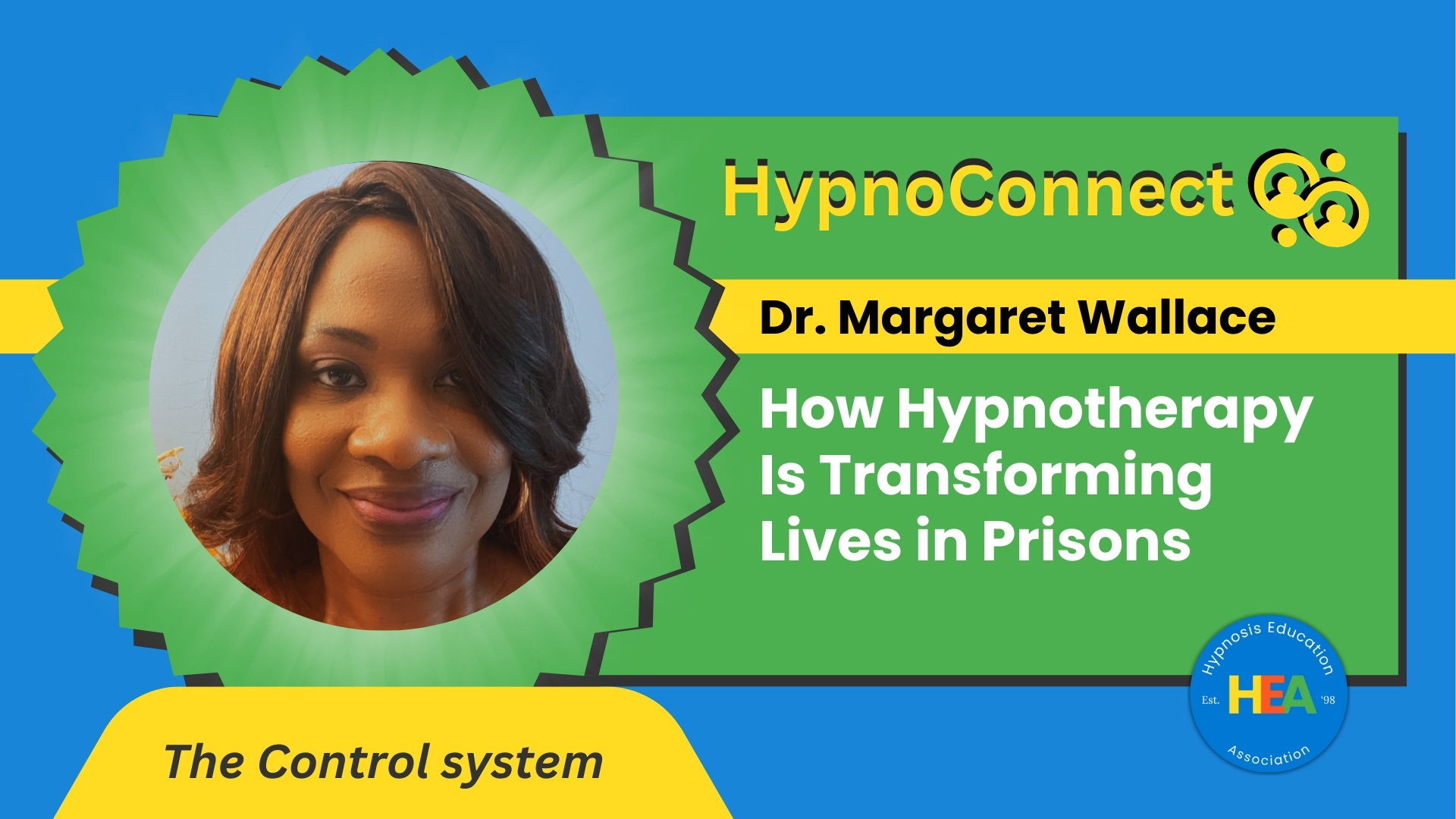
Dr. Wallace shared her experience and methods during a recent HypnoConnect event hosted by the Hypnosis Education Association, a live session that left practitioners rethinking the boundaries of what hypnotherapy can do and where it can go.
Trauma Has No Time Limit, but the Clock Ticks Fast
In traditional therapy, you might have a cozy office, soothing music, maybe a cup of tea, and a full hour to dig deep. Now picture this: prison guards pacing, fire alarms ringing, interruptions lurking behind every minute.
That is the environment in which Dr. Wallace works. She often has just 20 minutes. No frills. No fluffy scripts. No perfect setups. Just raw, aching humans who are holding onto pain they cannot even name.
And these are not just any sessions. These are people who are:
Surviving violent pasts
Carrying deep emotional scars
Often unaware they even have mental health issues
Desperate for change but unsure how it comes
There is no roadmap for this kind of work. There is no template. Yet Dr. Wallace has been doing it for over 24 years. And her approach? It is nothing short of revolutionary.
What If You Only Had 20 Minutes to Change a Life?
Let that sink in. Twenty minutes.
That is all the time Dr. Wallace often has to sit across from a soul craving peace. Most of us would panic. Overthink. Freeze. Because hypnosis, as we have been taught, takes time: induction, relaxation, deepening, scripts.
But for Dr. Wallace, the hypnosis begins before the client even sits down. Because when someone is desperate enough, when their mind is open enough, when the pain has stretched beyond bearable, healing becomes urgent, not clinical.
She meets them where they are. If someone walks in carrying the scent of blood and trauma, she does not try to lead them into a soft dreamscape. She leads them into their presence. She invites their subconscious to come forward, even for just a few minutes, and does the work.
And it works, not because the protocol is followed to perfection, but because the intention is aligned. This is the kind of real-world practitioner wisdom that HEA members bring to our community events month after month.
Hypnosis As a Human Tool, Not Just a Technique
There is a moment in the HypnoConnect event when Dr. Wallace says something profound:
"I set an intention that wherever the person's subconscious mind has got to take them, I'm coming with them."
That is not just powerful, it is everything. It is why this method works in chaotic, noisy, unpredictable spaces like prison therapy rooms. Because healing does not require silence. It requires connection, presence, and trust.
She does not aim to "hypnotize" someone into silence. She simply lets their mind go where it needs to go, and she goes with it. The protocol becomes instinctive, fluid, and adaptive. And when someone trusts you, their brain, yes, even in 20 minutes, can begin building new neural pathways.
This philosophy aligns deeply with the HEA's mission to advance ethical, human-centered hypnosis practice, not just as a clinical tool, but as a genuine vehicle for healing.
Misconceptions: Breaking Down the Myths About Hypnosis
Let us address the elephant in the room. Most people, especially those outside the wellness industry, see hypnosis as either stage magic or movie fantasy. Dr. Wallace knows this too well.
She does not even always use the word "hypnosis" in her sessions. She simply says: "I have something I can try with you. Do you want to hear more?"
That subtle shift removes fear, resistance, and stigma. Because when someone has tried everything else and failed, they are more than ready to try something different. Breaking down these exact misconceptions is a core part of why the Hypnosis Education Association exists, and why public education remains central to everything we do.
Authenticity and Intuition Over Perfection
What sets Dr. Wallace apart is not just her skill. It is her authenticity. She does not claim to have every answer. She is not chasing titles. She simply shows up, again and again, trusting that whatever needs to happen will happen.
She draws from everything: Reiki, sound therapy, intention, and presence. She adapts, evolves, and creates from the inside out. And the results speak for themselves:
Suicidal teens becoming thriving university graduates
Trauma survivors describing their brains as having "just got a massage"
Clients referring others months, even years, after their final session
Want to develop this kind of intuitive, adaptive practice? The Hypnosis Education Opportunities available through HEA include events, resources, and community spaces designed to help practitioners evolve beyond technique into true mastery.
The Ripple Effect Begins
As the session wrapped up, the conversation shifted to something larger: how to get more therapists into prisons, how to bring hypnosis into underserved communities, and how to train BIPOC therapists and women to use this tool for real impact.
Dr. Wallace is not just practicing hypnotherapy. She is training others, hosting podcasts, and offering free education through her Facebook series Transforming Trauma with Dr. Tropea.
Her mission? To help people transform childhood pain into purpose. To turn trauma into tools. And to show the world that hypnotherapy is not fringe, it is essential. This is the kind of practitioner that the Hypnotes Newsletter celebrates and amplifies, voices doing transformative work in spaces most people never see.
Trauma Is Not a Puzzle, It Is a Pattern
Dr. Wallace makes something crystal clear: most people walking into her prison office are not just dealing with one-time traumas. They are battling generational trauma, racial trauma, and a lifelong pattern of being misunderstood, dismissed, or ignored.
They are not looking for "fixes." They are looking for someone to finally say: "I see you. And I believe you can heal."
And that starts with empathy, not scripts. It begins with flexibility, not formulas. It demands emotional courage from the therapist.
Dr. Wallace speaks about a session where a young man came in full of anger, unable to express what he felt. He had been through years of pain, and now, sitting across from her, all he could say was "I don't even know how to talk." So what did she do? She met him there. Not with pity, but with presence. Within minutes, his subconscious led the way. He began releasing, crying, breathing differently, and walked out feeling like someone had pressed reset on his nervous system.
That is the real work. Not perfection. Not a diagnosis. But witnessing.
How Dr. Wallace Trains Therapists for This Mission
Most therapists are trained in technique. But Dr. Wallace teaches from the trenches. She is not just a hypnotherapist, she is a mentor, a guide, and a facilitator of breakthroughs for other therapists who want to bring this work into prisons, schools, and underserved communities.
Her approach:
Skip the rigid formulas and teach intuition
Practice active listening that transcends language
Train therapists to be human first, practitioners second
Use story and metaphor to connect on a deeper level
Empower practitioners to trust themselves, even in chaos
"You are the most powerful tool in the room."
If her message resonates with you, consider applying to speak at a future HEA event. Voices like Dr. Wallace's are exactly what our community needs more of.
Why Prisons Are a Hidden Opportunity for Change
While most people avoid working in prisons, fearing the danger, unpredictability, or emotional toll, Dr. Wallace sees something else entirely:
A room full of minds ready to shift
Environments where people have nothing left to lose
Opportunities to work with people who have never been truly heard
A chance to build self-worth where shame has ruled for years
She speaks of clients who said, "No one ever told me my brain could feel calm," or "I didn't know it was okay to cry." These are not just words. They are life-changing, future-shaping moments that would never happen if no one dared to walk in and offer them.
What It Takes to Do This Work
This work is not easy. And it is not for everyone. Dr. Wallace does not sugarcoat it. There are days when sessions get cut short. Alarms go off. Guards interrupt the flow. You sit with people who are grieving, screaming, or completely shut down.
But she also says:
"If you are called to do this work, you already know it."
That calling is quiet but persistent. Because somewhere in your soul, you know that your work is not just about helping people sleep better or quit smoking. It is about liberation, liberating people from inner prisons even while they are sitting in outer ones. Helping someone feel peace, even if they are never getting out. Creating pathways for healing that ripple into families, generations, and entire communities.
If you feel that pull, the first step is surrounding yourself with a community that supports that vision. Joining HEA connects you with practitioners across the globe who are doing meaningful, courageous work in exactly these kinds of spaces.
The Tools That Make It Possible
Dr. Wallace integrates more than just hypnosis into her sessions. She weaves in energy work, guided visualization, storytelling, and the power of unwavering presence. Here are just a few tools she regularly uses:
Metaphor Therapy: Helping clients "see" their trauma in image form, like boxes, rooms, shadows, or colors
Somatic Awareness: Tuning into physical sensations that speak louder than words
Breath Anchoring: Simple, short techniques to ground someone in chaos
Inner Child Healing: Reframing childhood experiences with compassion
Energetic Holding: Being a safe energetic container even when words fail
And none of this requires hours. Some of her most powerful sessions last just 10 to 15 minutes, because intention cuts through time. To explore more tools and frameworks like these, browse the Hypnosis Education Opportunities offered through HEA.
What the World Needs Now
Near the end of the HypnoConnect event, Dr. Wallace says she believes therapists and healers must become disruptors, not in a rebellious sense, but in a transformational one.
She wants to see:
More women of color trained in hypnotherapy
More therapists walking into systems and flipping narratives
More communities realizing that hypnosis is not weird, it is revolutionary
More practitioners doing this work with realness, not just certifications
And most importantly, she wants to see this healing scale, move beyond private offices, go global, and get into prisons, youth centers, courtrooms, and schools. Because this is how we rewrite generational trauma. This vision is something the HEA conference and community actively works toward every year.
Final Thoughts: You Are the Tool
If you are waiting for the perfect conditions, the perfect training, or the perfect client, you will miss the calling. The work begins now. Inside you. In how you sit with someone. In how you hold space. In how you trust yourself to walk into a room with nothing but your breath and still shift someone's entire world.
That is what Dr. Wallace models. And that is the invitation she is giving you.
Key Takeaways
Trauma healing does not require perfect conditions, it requires presence.
Hypnosis can be deeply effective even in short sessions under high stress.
Prisons are one of the most potent and underserved places for transformation.
Therapists must embrace intuition, empathy, and authentic connection over formulas.
The world needs you, not just your script, but your soul.
Want to Go Deeper? Here Is What You Can Do Next
Subscribe to Transforming Trauma with Dr. Tropea on Facebook for ongoing education
Start practicing presence-based healing techniques in your own sessions
Share this blog with another therapist or coach who needs to hear this
Ask yourself: "Where am I being called to serve that feels scary?"
Join the HEA community and connect with practitioners doing courageous, meaningful work
Register for the next HypnoConnect event and attend future sessions like this one live
Because you never know when your presence might be the only 20 minutes of peace someone ever experiences.
Listen on the go via Podcast: https://www.podbean.com/eas/pb-ufupj-1a5cfd4
Frequently Asked Questions
1. Can hypnotherapy really be effective in just 20 minutes?
Yes. The effectiveness of a session depends on the depth of presence and trust between practitioner and client, not the length of the session. When a person is highly motivated for change and the therapist is fully attuned, the subconscious mind can shift in a short window. Dr. Wallace's 24 years of prison work confirm this. Explore HEA's education resources to learn more about adaptive hypnotherapy approaches.
2. Is hypnotherapy safe to use with individuals who have severe trauma?
Yes, when practiced ethically and with trauma-informed training. The key is that practitioners must recognize trauma responses, avoid re-traumatization, and adapt in real time. Dr. Wallace always leads with consent, flexibility, and full presence rather than a predetermined script. The HEA Code of Ethics provides the professional framework for responsible practice in all settings, including high-risk environments.
3. Do clients need to believe in hypnosis for it to work?
No. The subconscious mind responds to safety and focused attention, not intellectual agreement. Dr. Wallace often avoids the word "hypnosis" altogether with skeptical clients, simply offering to try something different. Many of her most powerful breakthroughs happen with people who walked in resistant but open enough to try. The Hypnosis Education Association works actively to reduce public misconceptions that create this barrier.
4. What training do hypnotherapists need before working in prisons?
Beyond core hypnotherapy certification, practitioners need training in trauma-informed care, crisis awareness, and cultural competency. Dr. Wallace emphasizes that emotional resilience and intuitive adaptability matter as much as formal credentials. The HEA conferences and continuing education events address these advanced, real-world applications and connect practitioners with experienced mentors in this space.
5. How does hypnotherapy differ from traditional counseling in a prison setting?
Traditional talk therapy requires clients to verbally articulate their trauma, which is a major barrier for many incarcerated individuals. Hypnotherapy works directly with the subconscious, bypassing verbal defenses and producing meaningful shifts in far shorter sessions. This makes it especially effective where time and access are limited. The Hypnotes Newsletter regularly covers hypnotherapy's expanding role in institutional and community settings.
6. How can I get involved in bringing hypnotherapy to underserved communities?
Start by connecting with practitioners already doing this work. Attending HypnoConnect exposes you to real-world case studies and a network of professionals expanding hypnotherapy beyond private practice. Becoming an HEA member gives you access to monthly education events, C.E.U.s, and a global community ready to support you in answering this calling.


