How Hypnotic Questions Can Help Clients Shift Their Focus and Create Change
Sometimes the most useful learning moments happen when the original plan changes.
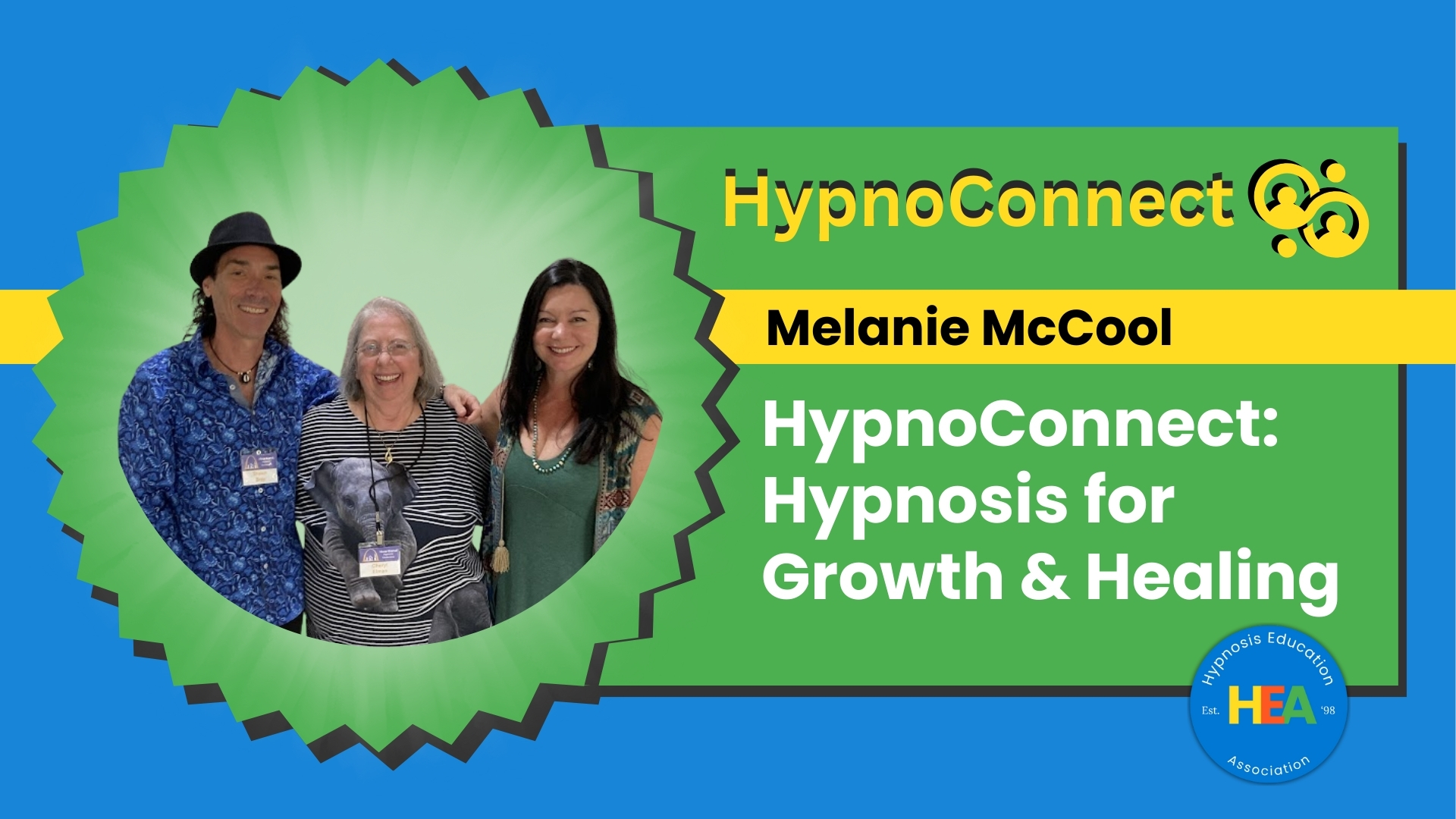
During this Hypno Connect gathering hosted by the Hypnosis Education Association (HEA), an unexpected schedule change opened the door to an informal but highly practical conversation about one of the simplest tools hypnosis professionals can use with clients: better questions.
The discussion explored how the questions people repeatedly ask themselves can keep attention locked on frustration, fear, and old patterns or begin directing the mind toward possibilities, resources, evidence, and desired outcomes. The session also demonstrated how practitioners can turn those questions into a journaling exercise, reinforce them between appointments, and even weave them naturally into hypnosis sessions.
For hypnosis professionals looking for practical ideas they can adapt to their own work, the conversation offered an important reminder: sometimes changing the direction of a client's attention begins with changing the question.
Want to join conversations like these live? Register for the next Hypno Connect and connect with hypnosis professionals sharing techniques, experiences, and ideas from across the field.
Watch the full session here:
Prefer to listen instead? Catch the podcast version here.
Why the Questions Clients Ask Themselves Matter
Listening for the Question Behind the Problem
Hypnosis practitioners spend a great deal of time listening, not only to the problem a client describes, but also to the language the client repeatedly uses around that problem.
During the session, the facilitator explained that she listens closely for what she calls the "bad questions" clients may already be asking themselves.
These can sound like:
"Why am I so stuck?"
"Why is this so hard for me?"
"Why can't I change?"
Questions like these may appear to be attempts at understanding, but they also direct attention toward the problem itself. A person who continually asks why they are stuck may keep searching for evidence of stuckness. Someone asking why change is so difficult may continue noticing examples of difficulty.
The practical idea presented during Hypno Connect was to interrupt that pattern and help clients begin asking questions that point toward what they actually want instead. This approach shares common ground with solution-focused brief therapy, a well-documented therapeutic model built on the same principle of directing attention toward solutions rather than problems.
Moving from Problem-Focused to Possibility-Focused Thinking
Rather than remaining centered on what is wrong, practitioners can help clients formulate questions that invite curiosity about improvement.
A question such as "Why am I struggling with this?" might become:
"How might I begin feeling more confident?"
"What would it take for this to become easier?"
"What can I notice today that tells me I'm already changing?"
This shift does not mean ignoring a client's challenges. Instead, it changes the direction of attention.
The conversation emphasized curiosity rather than forcing an immediate conscious answer. The client does not necessarily need to solve the question on the spot. The question itself becomes something they can continue reflecting on.
Turning Questions into Hypnotic Questions
Questions That Point Toward the Desired Outcome
The technique shared during the session begins by identifying what the client wants to experience instead of the current problem.
From there, the practitioner can build several variations of a positively directed question.
Examples discussed during the session included structures such as:
"How might I...?"
"What would it take for me to...?"
"I wonder how I might...?"
"Why is it becoming easier for me to...?"
"What evidence do I already have that...?"
Each structure approaches the desired outcome from a slightly different direction.
"How might I?" encourages possibility.
"What would it take?" encourages the mind to consider resources or conditions that could support change.
"I wonder how..." introduces curiosity.
"What evidence do I already have?" invites the client to notice experiences that may contradict an old limiting narrative.
The goal is not to find one magical phrase. It is to help the client repeatedly orient attention toward the outcome they want to strengthen.
Adding "Today," "Now," and "Even Now"
One of the most practical details shared during the session was the use of time-based language at the end of a question.
A client might ask:
"How might I feel more confident today?"
"What would it take for me to feel more capable now?"
"How can I reconnect with that sense of calm even now?"
The phrase "even now" received particular emphasis.
Why?
Because clients will inevitably encounter difficult days. They may wake up discouraged, experience an unexpected setback, receive stressful news, or simply feel less resourceful than they did the day before.
"Even now" acknowledges that reality while still directing attention toward possibility.
Instead of requiring ideal circumstances before change can happen, the question becomes: what resource, response, or next step might still be available under the circumstances that exist right now?
Using Hypnotic Questions Between Sessions
Put the Questions Where Clients Will See Them
The session moved beyond theory into a simple implementation strategy.
Clients can write their questions down and place them somewhere they will encounter them regularly, a bathroom mirror, desk, journal, phone note, or another visible location.
The purpose is repetition.
Rather than allowing the same automatic internal dialogue to dominate each morning and evening, clients intentionally introduce another set of questions into their routine.
A practitioner might encourage a client to read through several questions in the morning, journal briefly about them, and revisit them before bed.
This turns the technique into something the client can continue practicing outside the hypnosis room.
Journaling Without Forcing an Answer
The facilitator also described encouraging clients to write the questions repeatedly and explore different variations.
For example, someone working on confidence around public speaking might journal with questions such as:
"How might I connect with the people listening to me today?"
"What would it take for my message to land clearly?"
"How can I step into leadership during this presentation?"
"What evidence do I already have that I can help the people in this room?"
That final question can be especially useful because it directs the client toward existing resources.
Instead of mentally rehearsing everything that could go wrong, they begin searching their own experience for evidence that they have communicated effectively before, helped someone before, handled pressure before, or successfully navigated a similar situation.
The exercise becomes less about inventing confidence and more about recognizing what may already be available.
Shifting Attention Away from Self-Consciousness
From "How Am I Doing?" to "Who Can I Help?"
One example from the discussion centered on public speaking.
Before a presentation, people can easily become absorbed in questions about themselves:
What if I mess up?
What if people judge me?
What if I forget what I'm going to say?
What if I'm not good enough?
The session suggested redirecting those questions toward the people being served.
Instead of asking, "How will I perform?" the speaker might ask:
"How might I empower the people I'm speaking to today?"
"What would it take for this message to reach the person who needs it?"
"How can I be fully present for this audience?"
That change in orientation can move attention away from excessive self-monitoring and toward communication, contribution, and connection.
For hypnosis professionals, the same principle can apply far beyond public speaking. A client's questions can be reframed around relationships, habits, professional goals, emotional states, or any other area in which attention has become repeatedly anchored to the unwanted outcome.
Bringing Hypnotic Questions into the Hypnosis Session
Using the Client's Own Language
The technique is not limited to homework.
During the Hypno Connect discussion, the facilitator described first developing meaningful questions collaboratively with a client and then drawing on those same questions during hypnosis.
This creates continuity between conscious conversation, between-session reflection, and the hypnotic experience itself.
For example, if a client has been exploring:
"What would it take for me to trust myself more today?"
a practitioner might incorporate language such as:
"And you can become increasingly curious about what it would take to recognize that sense of trust..."
The wording does not need to be identical every time. What matters is that the question remains relevant to the client's goals and uses language that already has meaning for them.
Curiosity as an Intervention
There is something useful about not demanding an immediate answer.
A direct statement tells the client what to think.
A carefully chosen question can invite exploration.
Rather than insisting, "You are confident," a practitioner might invite the client to become curious about how confidence could begin showing up differently.
Rather than telling someone exactly what resource they need, the question can encourage them to notice their own associations, memories, possibilities, and solutions.
This makes hypnotic questions particularly adaptable because they can be personalized to the client's language and desired outcome.
Creating a Repeatable Client Practice
Workshop the Questions Together
The session also highlighted the value of developing questions collaboratively instead of simply handing clients a generic worksheet.
A practitioner can spend a few minutes identifying the client's recurring problem-focused language and then workshop alternatives together.
The process might look something like this:
First, identify the question the client keeps asking.
Next, clarify what the client wants instead.
Then turn that outcome into several curiosity-based questions.
Finally, encourage the client to work with those questions between sessions and reinforce relevant ones during hypnosis.
The exercise itself can be brief, but the client leaves with something tangible they can continue using.
Make the Questions Specific Enough to Matter
Broad questions can be useful, but specificity often makes them more personally relevant.
For someone preparing to speak publicly:
"How can I be better?" is vague.
"What would it take for me to communicate this message clearly today?" has a clearer direction.
For someone working on boundaries:
"Why do people take advantage of me?" keeps attention on other people's behavior.
"How might I communicate what I need more clearly even now?" shifts attention toward something the client can explore and influence.
The most effective question is usually one connected to the client's actual goal, language, circumstances, and available choices.
The Power of Simple Tools in Hypnosis
Not Every Intervention Has to Be Complicated
One of the recurring themes across Hypno Connect sessions is that useful change work does not always require an elaborate technique.
A small shift in wording can alter the direction of an entire conversation.
The hypnotic-question exercise shared in this session is simple enough to use during an intake conversation, incorporate into journaling homework, adapt to group programs, or integrate into a formal hypnosis session.
What makes the technique valuable is not complexity. It is consistency and relevance.
When a client repeatedly rehearses questions centered on failure, difficulty, or helplessness, those themes can dominate attention. Helping that client deliberately rehearse questions centered on resources, possibilities, evidence, and next steps offers another direction to explore.
Adapt the Tool Rather Than Copying It Word for Word
As with any hypnosis technique, practitioners should adapt hypnotic questions to the person in front of them.
Not every client will respond to the same wording.
Some may enjoy "I wonder..." language.
Others may respond more naturally to "What would it take...?"
Another client may connect most strongly with evidence-based questions such as, "What tells me I'm already making progress?"
The skill lies in listening carefully enough to discover which questions create curiosity instead of resistance.
Community, Connection, and Shared Learning
The unusual circumstances of this Hypno Connect session also reflected something central to the Hypnosis Education Association community.
The scheduled presentation changed, but the gathering still became an opportunity for practitioners to exchange ideas, discuss their work, share resources, and learn from one another.
Participants talked about their specialties, professional development, upcoming conferences, community involvement, and the different directions hypnosis has taken them.
That collaborative atmosphere is an important part of Hypno Connect. Sessions are not only about listening to a formal presentation. They create space for hypnosis professionals to connect with colleagues, encounter techniques outside their usual approach, and leave with ideas they can explore in their own work.
Join the Next Hypno Connect
The hypnotic-question exercise offers practitioners a deceptively simple idea: pay attention to the questions clients repeatedly ask themselves.
When those questions continually direct attention toward the problem, practitioners can help clients experiment with questions that point toward possibility, evidence, resources, and desired outcomes instead.
Those questions can then become part of journaling, between-session practice, pre-talk conversation, and hypnosis itself.
Hypno Connect brings together conversations exactly like this, practical ideas, different perspectives, unexpected insights, and practitioners willing to share what they are discovering in their work.
If you would like to learn alongside other hypnosis professionals and take part in upcoming conversations, register for the next Hypno Connect.
Bring your questions, share what is working in your practice, and stay connected with the Hypnosis Education Association community.
Frequently Asked Questions
What are hypnotic questions?
Hypnotic questions are intentionally framed questions designed to direct a client's attention toward possibilities, resources, desired outcomes, or useful areas of curiosity. They can be used during conversation, journaling exercises, or incorporated into hypnosis.
Why change the questions a client is asking themselves?
Repeated problem-focused questions can keep a client's attention centered on what is wrong or difficult. Reframing those questions can encourage the client to consider what they want instead, what resources may already be available, and what evidence of progress they can notice.
What are examples of hypnotic questions?
Useful structures can include "How might I...?", "What would it take for me to...?", "I wonder how I might...?", and "What evidence do I already have that...?" The wording should be adapted to the individual client and their goals.
Why use the phrase "even now" in a hypnotic question?
"Even now" can be useful when circumstances are less than ideal. A question such as "How can I reconnect with confidence even now?" acknowledges the current challenge while still encouraging the client to explore what may be possible in the present moment.
Can hypnotic questions be used outside a hypnosis session?
Yes. During the session, participants discussed using the questions as journaling prompts and placing them somewhere visible so clients can revisit them regularly. They can also be incorporated into future hypnosis sessions.
How can practitioners personalize hypnotic questions for clients?
Start by listening for the client's recurring problem-focused language, clarify the outcome they actually want, and then create questions that direct attention toward that outcome. Using the client's own words and preferred style of language can make the questions feel more natural and relevant.
What is Hypno Connect?
Hypno Connect is a gathering from the Hypnosis Education Association where hypnosis professionals can learn from presentations, discussions, demonstrations, and one another's experiences. To participate in an upcoming session, register for the next Hypno Connect.


