Joshua Kirnie on Creating a Compelling Future for Hypnotherapy Clients
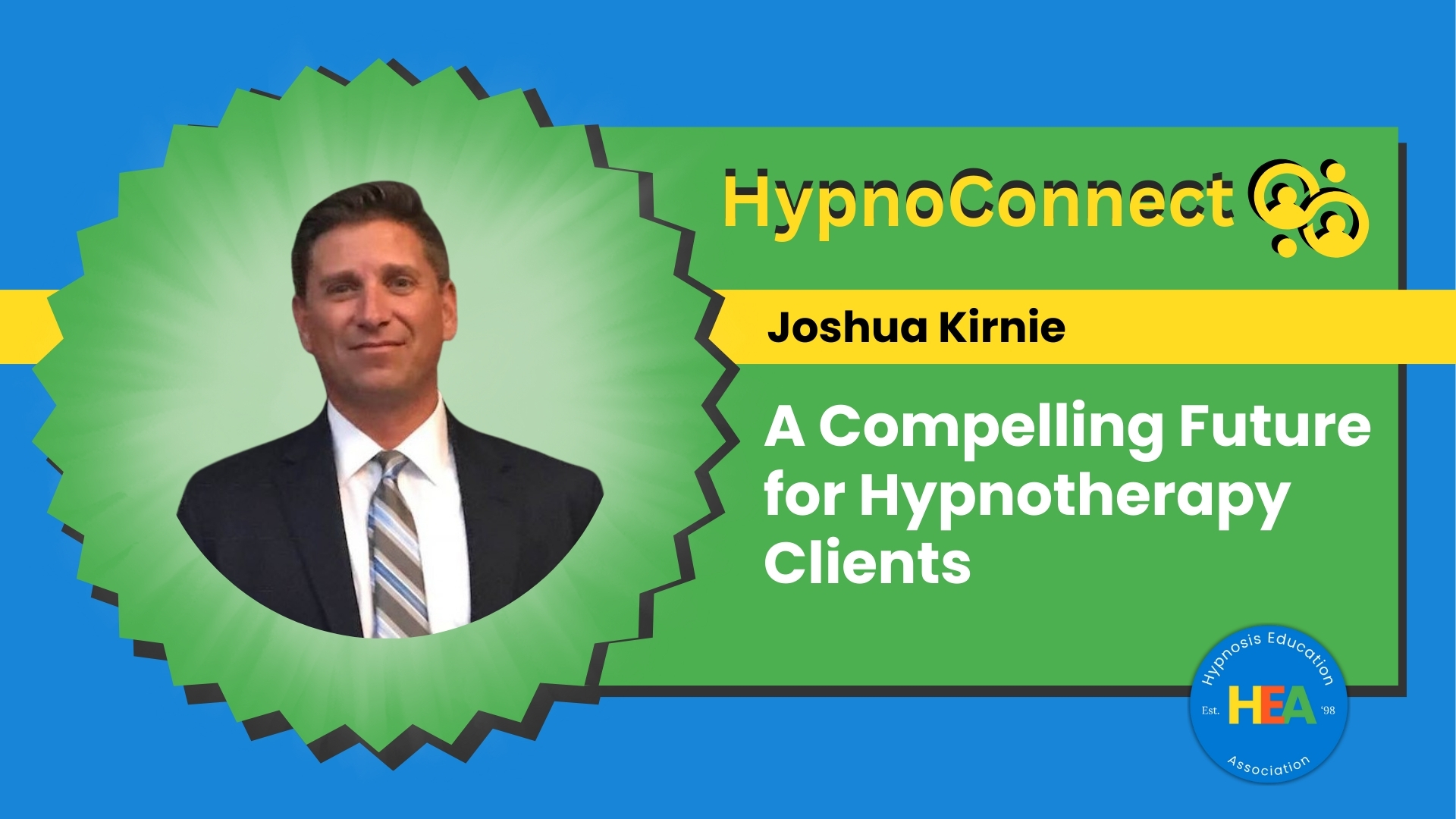
In an inspiring Hypno Connect session hosted by the Hypnosis Education Association (HEA), Joshua Kirnie, an international trainer, lecturer, mentor, consultant, and world-class neurolinguist with over 16 years of experience, shared his transformative approach to helping clients craft a compelling future. The session featured Joshua Kirnie's intuitive process for guiding clients from pain to joy, alongside insights into his collaborative Anxiety Checklist project. The event buzzed with engagement, including a live demonstration and lively Q&A. This blog dives into Kirnie's strategies, offering hypnotists practical tools to empower clients, reduce anxiety, and foster lasting cha
nge. Whether you are a seasoned practitioner or new to hypnosis, register for HypnoConnect to explore how to elevate your practice.
Watch the full session here:
A Journey from Syracuse to Global Impact
The Neurolinguist's Path
Joshua Kirnie's 16-year career in neurolinguistics and hypnosis has touched thousands, helping them drop destructive habits, build new skills, and create compelling paths toward their goals. Based in Syracuse, New York, Kirnie's dynamic presence and passion for real change shone through in this Hypno Connect session. His experience, from clinical settings to international training, informs his approach, blending neurolinguistic programming (NLP) with hypnosis to craft futures free of anticipated disasters. The enthusiastic introduction, complete with original music, set the stage for Kirnie's engaging talk.
Setting the Stage Amidst Tech and Tacos
The session kicked off with a lighthearted vibe as Kirnie juggled technical setup, ensuring the livestream worked for the HEA Facebook group. Joined by his dog Ace, he shared a chuckle about keeping the audience quiet. The casual banter set a warm tone. Kirnie's mention of Woodstock visits highlighted the community's interconnectedness, with the growing frequency of Hypno Connect sessions noted, now weekly due to high demand.
Decoding Client Readiness: The Five Filters
Assessing Values, Attitudes, and Beliefs
Kirnie opened his presentation, "Creating a Compelling Future for Your Clients," by outlining five filters to assess how far clients can progress in hypnosis. The first filter evaluates values, attitudes, and beliefs. Attitudes reflect a client's communication style, playful like an adolescent or serious like a stockbroker. Beliefs indicate how far clients think they can go, revealed through their speech. Values show what they prioritize, such as possessions or relationships. Kirnie emphasized listening for these cues in casual encounters, like a grocery store chat, or formal consultations.
Talent vs. Acumen
The second filter distinguishes whether clients believe in innate talent or learned acumen. Kirnie noted it is rarely black-and-white; clients might attribute 30% to genetics and 70% to hard work. Understanding this balance helps hypnotists gauge if clients expect instant results or are willing to build skills. For example, a client who believes success "just happens" may need more guidance to focus effort. Kirnie's conversational style made this complex assessment accessible, encouraging practitioners to tailor interventions accordingly.
Character Under Stress
The third filter examines character under stress, inspired by a conversation with Kirnie's 21-year-old daughter about sorority conflicts. He explained that true character emerges when clients cross stress boundaries, revealing how they handle pressure. This insight helps hypnotists predict client resilience. Kirnie cautioned against needling clients to test this but stressed its importance for long-term relationships, especially with students or ongoing clients. A collaborator later connected this to the Anxiety Checklist, designed to manage stress responses.
Accountability and Self-Concept
The fourth filter assesses accountability and self-concept, how clients view their role in the world. Kirnie contrasted traditional NLP with "upside-down" approaches by younger manifestation coaches, who focus on future goals rather than past cleanup. Clients who blame others for setbacks or fidget during tough topics may struggle with accountability. Conversely, those who reflect on their actions align better with change work. Kirnie's mention of self-concept as a balance, not too important yet impactful, resonated with attendees.
Motivation and Intent
The fifth filter explores what motivates clients and what they are trying to prove. Kirnie linked this to accountability, noting that clients' actions under pain reveal their goals. For example, a client might act out to prove independence or seek validation. By identifying these drivers, hypnotists can align suggestions with clients' deeper intentions. Kirnie's nod to Virginia Satir's influence hinted at deeper psychological layers, but he kept the focus practical, ensuring hypnotists could apply these filters immediately.
The Process of Crafting a Compelling Future
Living in the End
Kirnie's core technique, "living in the end," involves guiding clients to embody the feeling of their desired outcome. Unlike traditional NLP, which often focuses on resolving past issues, this approach prioritizes future-oriented physiology. Kirnie described it as a new presupposition of change, inspired by younger practitioners who "delusionally" focus on goals. He emphasized the somatic, feeling-based aspect, ensuring clients feel success in their bodies.
The Guided Visualization
In a live demonstration, Kirnie led participants through a visualization. He instructed them to choose a future event, big or small, from tomorrow to a decade away, and float above it, then into their body, imagining success. Success, he clarified, was not grandiose like winning the lottery but routine and reproducible. Participants closed their eyes, focusing on feelings below the neck, lumbar spine, stomach, shoulders, hips, or knees, where stress or action manifests. Kirnie encouraged amplifying this positive feeling, noticing how the scene shifts as intensity grows.
Clearing Negative Energy
After the initial visualization, Kirnie asked if participants sensed lingering negative emotions. One noted a neutral feeling, not anxious but distinct. Kirnie guided a second visualization, instructing participants to pull out any mitigating energy "like a string," locking in a pure, positive feeling. The participant reported their jaw relaxing further, highlighting the process's power to refine emotional states. Kirnie stressed repetition, three to four runs, to ensure clients master this independently.
The Anxiety Checklist: A Collaborative Innovation
A Tool for Future-Focused Change
Kirnie introduced the Anxiety Checklist, a project with a collaborator, combining NLP and Cognitive Behavioral Therapy (CBT). The checklist includes subliminals, a hypnosis program, and a comprehensive course. Tested with 30 people over seven days, it received positive feedback with no adverse reactions. Kirnie offered to share the first subliminal with attendees who provided their email, encouraging practitioners to test its kinesthetic impact. The project's March-April launch was noted, with a website in development.
Incentives for HEA Members
Kirnie outlined incentives for HEA members, including a 25% discount (code HA25) for clients referred to the master class and a 50% revenue share for promoters. He encouraged sharing updates in the HEA group, noting the project's early stage. The collective energy behind the checklist, inspired by hypnosis and NLP, makes it a promising tool for practitioners addressing anxiety-driven future fears.
Integrating Energy and Hypnosis
A Spiritual Approach
A spiritual regression hypnotherapist shared their approach during the Q&A. After finding clinical work anxiety-inducing, they shifted to past-life and spiritual realm regressions, preparing sessions with smudging and candles, trusting the "divine" to guide healing. In a recent session, a client experienced healing energy, felt love in their heart. Kirnie praised this system, noting that letting go of the need to be "special" frees energy for extraordinary outcomes, aligning with his focus on ordinary, reproducible success.
Energy as a Core Component
Kirnie agreed on integrating energy work with hypnosis, especially for kinesthetic clients. He recounted a guild discussion about AI, emphasizing that human energy, transmitted through voice and presence, cannot be replicated. A script he wrote lost its "umph" when filtered through AI, proving the irreplaceable role of love and connection in hypnosis. Feelings, not just visuals, drive lasting change, as clients remember how practitioners make them feel.
Upside-Down NLP: A New Wave
Future Over Past
Kirnie contrasted traditional NLP's focus on past cleanup with the "upside-down" approach of younger manifestation coaches, who prioritize future goals. He predicted that this shift will dominate in the next five years, keeping hypnosis vibrant. Kirnie's emphasis on somatic experience, locating feelings in the body, adds a powerful dimension.
Balancing Standards and Innovation
Kirnie stressed maintaining flexible, safe cleanup techniques while embracing future-focused methods. His process avoids dwelling on past pain unless an "elephant is standing on the client's foot," ensuring immediate commitment to change. The structured process removes doubt and anxiety to sustain progress.
Practical Applications and Community Engagement
Reproducing the Process
Kirnie encouraged practitioners to repeat the visualization process multiple times, even prompting clients subtly to ensure mastery. He advised keeping goals private to "trap the power" of intention, using a personal book to collect images of desired outcomes. A success story of visualizing a meeting outcome that manifested better than dreamt reinforced the technique's real-world impact.
HEA's Growing Community
HEA's mission is to educate professionals and the public, reduce misconceptions, and promote ethical hypnosis. With weekly Hypno Connect sessions, an annual conference, and press releases, HEA fosters a global community. Membership ($55 annually) offers replays, a learning library, and directory listings. A January 20th volunteer roundup was announced, inviting contributions from attendees.
Join HypnoConnect: Shape Your Future
Joshua Kirnie's session offers hypnotists a powerful framework to guide clients toward compelling futures, blending NLP, somatic focus, and energy work. His Anxiety Checklist and intuitive filters empower practitioners to address anxiety and foster lasting change. Do not miss out and register for HypnoConnect to join the Hypnosis Education Association. Share this blog with colleagues and attend the next session to elevate your practice and inspire change!
Hear the full discussion on the HypnoConnect podcast: Joshua Kirnie on Creating a Compelling Future for Your Clients Through NLP and Manifestation Mastery.
Frequently Asked Questions
What are Joshua Kirnie's five filters for assessing client readiness in hypnosis?
Joshua Kirnie's five filters are values, attitudes, and beliefs; talent versus learned acumen; character under stress; accountability and self-concept; and motivation and intent. These filters help hypnotists understand how far a client can progress and tailor their approach accordingly.
What is the "living in the end" technique in hypnotherapy?
"Living in the end" is Joshua Kirnie's core future-focused technique where clients are guided to fully embody the feeling of their desired outcome rather than resolving past issues. The emphasis is on somatic, body-based experience to make the future feel real and reproducible.
What is the Anxiety Checklist project introduced by Joshua Kirnie?
The Anxiety Checklist is a collaborative tool combining NLP and Cognitive Behavioral Therapy, including subliminals, a hypnosis program, and a course. It was tested with 30 participants over seven days with positive results and is designed to help practitioners address anxiety-driven future fears in clients.
How does the "upside-down NLP" approach differ from traditional NLP?
Traditional NLP typically focuses on resolving past patterns and cleaning up old experiences. The upside-down approach, popularized by younger manifestation coaches and endorsed by Kirnie, prioritizes future goals and somatic focus first, bypassing extended past cleanup unless absolutely necessary.
What is HypnoConnect and how can hypnotherapists join?
HypnoConnect is a weekly virtual session hosted by the Hypnosis Education Association featuring expert practitioners sharing real techniques, insights, and demonstrations. Hypnotherapists can register at hypnosiseducationassociation.com/hypno-connect-register to attend and access replays through HEA membership.
Why does Joshua Kirnie believe human energy cannot be replaced by AI in hypnosis?
Kirnie shared that when he ran a script he had written through an AI filter, it lost its impact and depth. He argues that the love, presence, and energetic connection a practitioner brings through their voice and intention are irreplaceable, and that clients remember how a practitioner makes them feel far more than the words used.


