Parts Healing in Hypnosis | Dr. Kelly Tallaksen
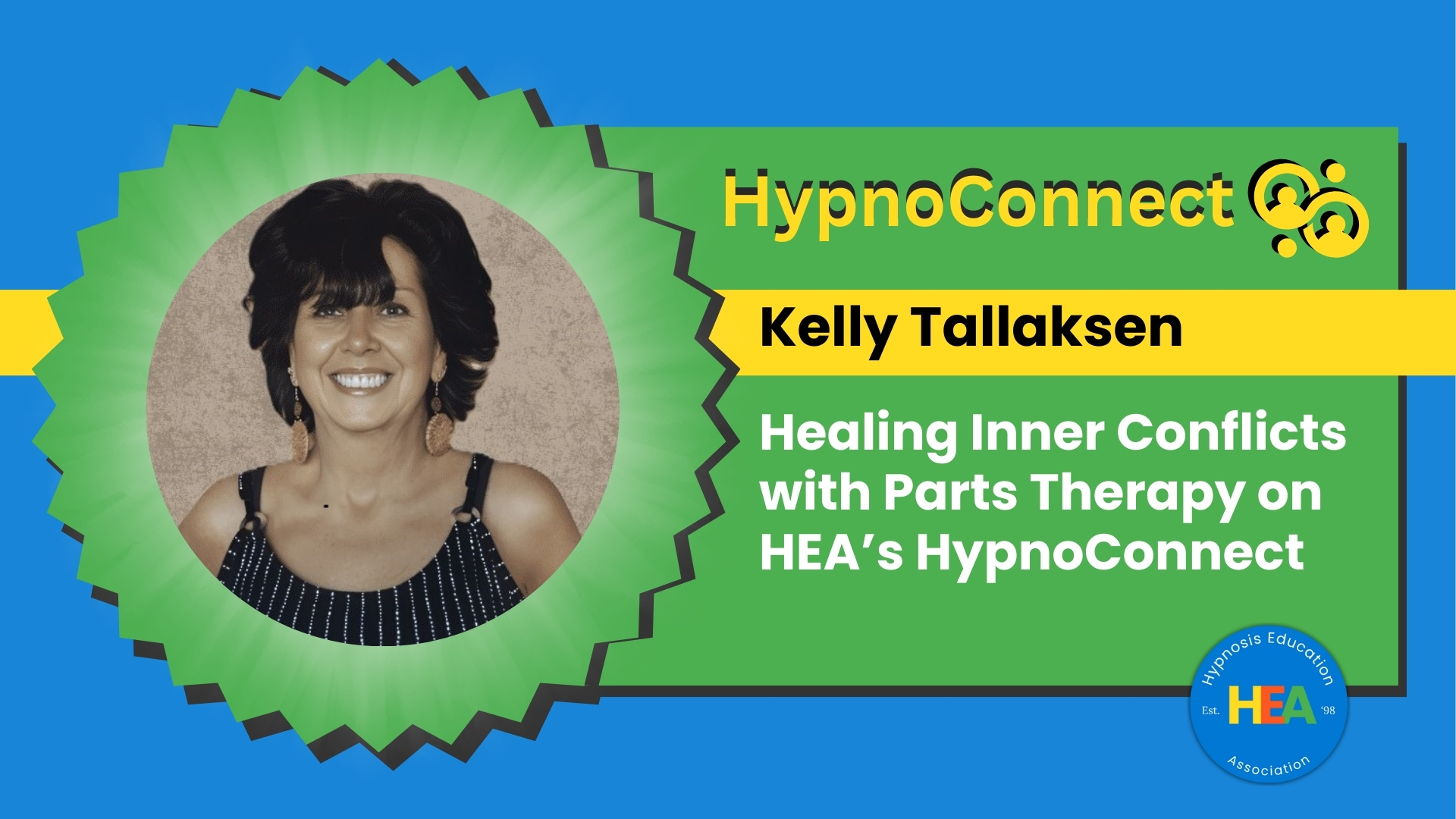
During a Hypno Connect session hosted by the Hypnosis Education Association (HEA), board-certified hypnotist and NGH hypnosis instructor Dr. Kelly Tallaksen shared her approach to parts healing and integration, a method for helping clients explore internal conflicts that may be working against their conscious goals.
Kelly describes the process as identifying parts of the self that may exist outside conscious awareness, understanding what they are trying to accomplish, and helping them integrate more harmoniously with the whole person.
Her central message was compassionate and practical: there are no "bad" parts to eliminate. Instead, even behaviors that appear limiting may have developed from an earlier attempt to protect the person.
Want to join conversations like this live? Register for the next Hypno Connect and learn alongside hypnosis professionals from around the world.
or listen to the audio version on our podcast.
What Is Parts Healing and Integration?
Parts healing begins with the idea that a person can experience different internal motivations at the same time.
Consciously, someone may want to stop smoking, change an eating habit, pursue a relationship, or achieve another goal. Yet another part of them may resist that change.
Kelly describes these internal parts as having their own concerns and protective intentions. Some may have developed during childhood or difficult experiences and continue operating from beliefs that once felt necessary for safety.
This can create an experience many clients describe simply as:
"I know what I want to do, so why do I keep getting in my own way?"
Parts work offers one framework for exploring that question. Practitioners who are newer to hypnosis and want a foundation in how the field works may find it helpful to review our step-by-step guide to becoming a hypnotherapist before layering in more advanced approaches like this one.
Understanding Protector Parts
When Protection Becomes Limitation
One of the most important concepts Kelly discussed was the protector part.
A protector may develop around an earlier experience of fear, rejection, shame, emotional discomfort, or another perceived threat. Its original intention is protection.
The problem is that the person grows and changes while that old protective response may remain.
A strategy that once seemed necessary can therefore become limiting later in life. What looks like self-sabotage from the outside may, within this framework, represent an outdated attempt to keep the person safe.
Rather than fighting that part, Kelly's approach is to become curious about it.
What is it protecting? What does it fear would happen if the client changed?
Looking Beneath Self-Sabotage and Secondary Gain
Parts healing can be especially useful when a client consciously wants change but repeatedly struggles to follow through.
Kelly discussed secondary gain situations where maintaining an unwanted behavior or condition may also provide some perceived benefit or protection.
For example, a client might consciously want one outcome while another part associates achieving it with a new risk.
This is why simply repeating suggestions may not always address the underlying conflict. Instead, parts work attempts to uncover what the resistant part believes it is accomplishing.
That shift from "Why am I sabotaging myself?" to "What might this part be trying to do for me?" can open a very different conversation.
Parts Healing and Age Regression
Kelly sees considerable overlap between parts work and age regression.
In age regression, a practitioner might invite a client to explore an earlier experience connected with a present feeling. With parts healing, the practitioner may instead invite forward the part experiencing the feeling or maintaining the behavior.
Kelly favors keeping this process relatively simple during hypnosis. Rather than introducing many categories or labels, she may ask the client to connect directly with "the part of you that's going through this experience."
The intention is to allow relevant material to emerge without encouraging excessive conscious analysis.
A Compassionate Approach to Inner Conflict
Don't Get Rid of the Part; Understand It
Clients may naturally want to eliminate the part they believe is causing the problem.
Kelly takes a different approach.
Because that part belongs to the client, the objective is not rejection but healing and integration.
A practitioner can explore questions such as:
What is this part's job?
How does it believe it is helping?
What does it fear would happen if it stopped?
When might this protective role have begun?
What does it need to feel safe now?
Could it serve the client differently today?
Kelly emphasized that parts work isn't "cookie cutter." Questions should follow the concerns, needs, and intentions that emerge from the individual client.
Helping the Protector Recognize the Present
An important step is helping an older protective response recognize that circumstances have changed.
Kelly described bringing the client's adult self into the process so the younger or protective part can recognize that the person now has resources, choices, experience, and abilities they didn't have earlier.
The practitioner isn't telling the protector that it failed.
Instead, the message becomes something closer to:
You protected me when I needed you. Now circumstances are different, and you can join me in experiencing life differently.
When a protector remains reluctant, Kelly recommends continuing the conversation rather than forcing change. In some cases, she uses a 30-day trial, allowing the part to experiment with a new response without feeling that it must permanently surrender its protective role.
Techniques for Accessing Parts in Hypnosis
Kelly discussed several approaches practitioners may encounter, including conference-room imagery, ego-state approaches, voice dialogue, and Gestalt chair work.
One of her preferred techniques is the empty-chair approach.
The client can imagine two chairs: their present self in one and the relevant part in another. The practitioner then facilitates a dialogue, helping the client explore what that part feels, believes, wants, or fears.
Kelly's broader point was that practitioners don't necessarily need an overly complicated system. This mirrors a theme practitioners will recognize from common beginner hypnosis mistakes to avoid, where rushing the process or overengineering a session tends to work against the client rather than for them.
Different approaches may use different terminology, but the fundamental process is often similar: identify the internal experience, give it a voice, understand its intention, and work toward greater integration.
Giving Protector Parts a New Role
Integration doesn't necessarily mean a protective part disappears.
Kelly suggests helping it find a new job.
If its original purpose was to keep the client safe, perhaps that protective energy can now support discernment, confidence, healthy boundaries, self-respect, or another resource that better serves the client's current life.
This reframes the process from:
"How do we get rid of you?"
to:
"How can you help differently now?"
That distinction reflects the compassionate foundation of Kelly's approach.
Moving Toward Integration
Kelly emphasized that when several parts emerge during a session, the goal is to bring them toward integration rather than leaving them in opposition.
She compared the process to a symphony: individual instruments remain distinct, but together they create something harmonious.
Ultimately, parts healing isn't about deciding that one part of the client is good and another is bad. It is about helping the person feel more whole, balanced, and authentic while reinforcing the conscious goal that originally brought them to the session.
Join the Next Hypno Connect
Dr. Kelly Tallaksen's presentation offered hypnosis practitioners a useful way to rethink resistance and inner conflict.
A behavior that appears irrational or self-sabotaging may make more sense when viewed through the perspective of protection. By approaching those internal responses with curiosity rather than rejection, practitioners can explore what they need, what they fear, and whether they can take on a healthier role.
The larger lesson is simple:
Instead of fighting the part that resists change, understand why it believes resistance is necessary.
Hypno Connect brings hypnosis professionals together to explore practical techniques, exchange ideas, and learn from experienced practitioners.
Register for the next Hypno Connect to join an upcoming session.
Frequently Asked Questions
What are healing and integration in hypnosis?
It is an approach that explores different internal parts or motivations that may be creating conflict with a client's conscious goals, with an emphasis on understanding and integrating them.
What is a protector part?
In this framework, a protector part is an internal response that attempts to keep the person safe, often based on beliefs or experiences formed earlier in life.
Can parts work help with self-sabotage?
Parts work can provide a framework for exploring why someone repeatedly acts against a conscious goal, including possible protective intentions or secondary gains.
Should practitioners try to eliminate unwanted parts?
Kelly's approach says no. Instead, the practitioner seeks to understand the part, address its concerns, and help it integrate or adopt a more useful role.
How can hypnosis practitioners access a part?
Kelly discussed several methods, including direct invitations during hypnosis, age-regression-style exploration, dialogue, and the Gestalt empty-chair technique.
How can I attend Hypno Connect?
The Hypnosis Education Association hosts Hypno Connect sessions featuring hypnosis professionals sharing techniques, experiences, and ideas. Register for the next Hypno Connect here.


