Intuition, Awareness, and Client-Led Hypnotherapy (Lani Gonzales)
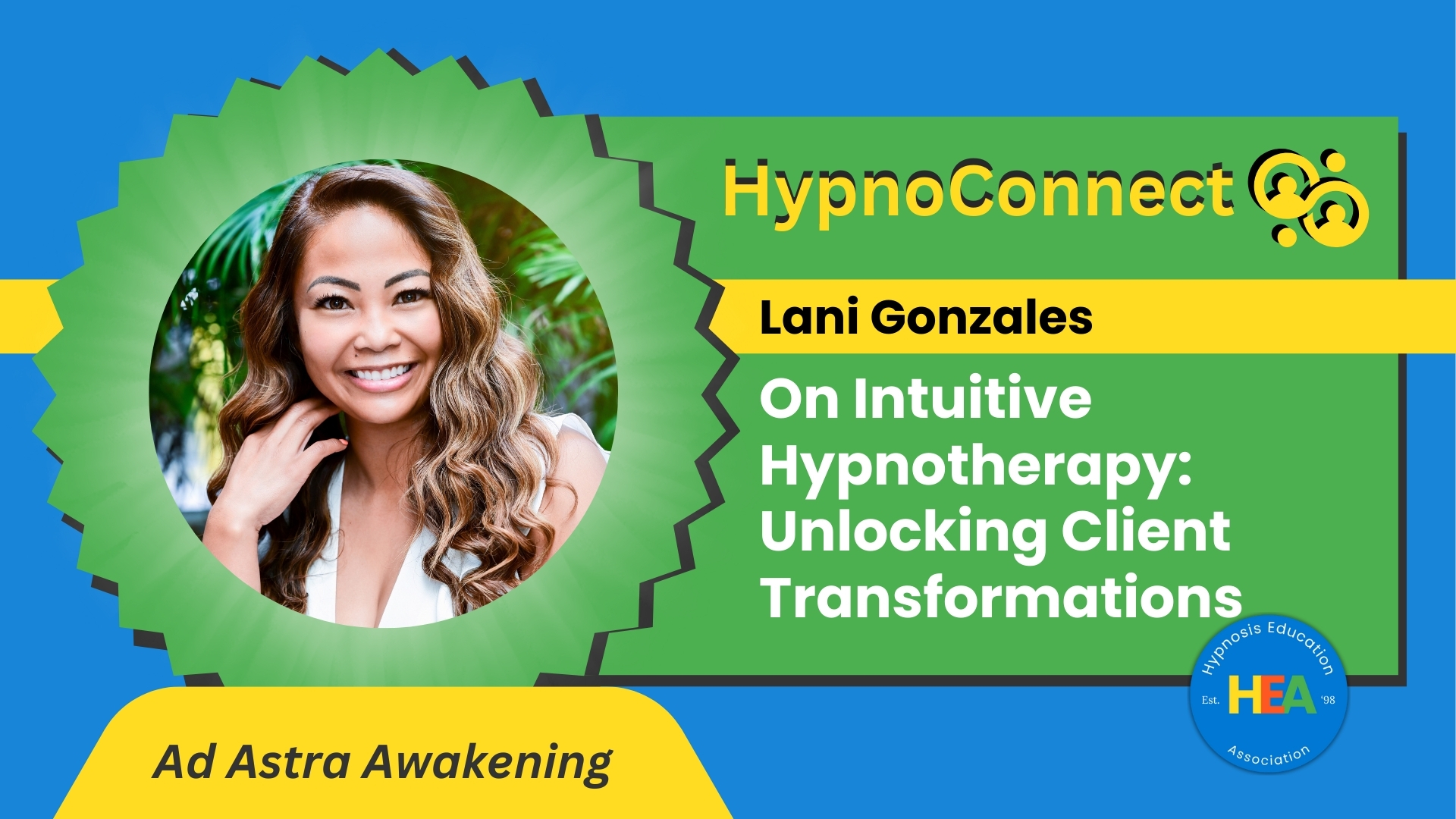
In an insightful Hypno Connect session hosted by the Hypnosis Education Association (HEA), clinical hypnotherapist, licensed attorney, author, and founder of Ad Astra Awakening Lani Gonzales explored how practitioners can bring intuition, awareness, and more of themselves into their work. Gonzales encouraged hypnotherapists to look beyond technique alone and consider how deeper listening, previous professional experience, self-awareness, and what she calls "senses of awareness" can support client-led sessions. Her presentation offered three central ideas: develop your intuition, bring your whole self into the room, and remember that you are your first client. Whether you are developing your practice or looking for new ways to connect with clients, register for Hypno Connect to continue learning alongside hypnosis professionals from the HEA community.
Watch the full session here:
Prefer to listen on the go? Listen to the podcast episode
Showing Up with Mind, Heart, Spirit, and Soul
Hypnotherapy as a Calling
Gonzales opened by asking practitioners to think about hypnotherapy as more than a career. For many people in the helping professions, she explained, the work can feel like a calling.
Hypnotherapists already bring their minds into sessions through listening, critical thinking, scripts, training, and technique. They also bring their hearts through a desire to serve.
Gonzales invited practitioners to consider another question: are you also bringing your spirit, intuition, and complete sense of self into the room?
This became the foundation for her discussion of intuitive development.
Developing Your Senses of Awareness
Listening Beyond the Logical Mind
Gonzales described intuition as information that may arrive before the logical mind can fully explain it.
A practitioner might experience a physical sensation, image, color, feeling, thought, or immediate impression when meeting someone. Instead of automatically dismissing that information, Gonzales encouraged practitioners to become curious about it.
In her own practice, she sometimes pays attention to what she senses before speaking with a prospective client. These impressions can help her consider whether the person is an appropriate client for her and what may be happening beneath the problem initially presented.
For Gonzales, intuition does not replace listening or professional training. It becomes another source of information practitioners can learn to notice.
Building Rapport by Helping Clients Feel Seen
Gonzales shared an example from her practice in which she would write down impressions before meeting a client and set the note aside. After the client explained what was happening, she could compare the conversation with what she had previously noticed.
She described this as one way of communicating an important message to the client: "I see you."
Clients may not always be able to articulate the deeper source of their distress. Paying attention to verbal language, body sensations, imagery, emotions, and other cues can help practitioners listen beyond the surface problem and build stronger rapport.
Practicing Intuitive Development
Start with the First Impression
Gonzales recommended beginning intuitive development in simple, low-pressure ways.
One exercise involves imagining or describing a lemon without deliberately emphasizing any particular sense. Notice what appears first. Do you immediately see its shape or texture? Do you imagine its smell? Do you experience the taste or physical sensation?
Gonzales described visual imagery as one of her strongest channels of awareness. Her recommendation is to notice which type of information appears naturally and practice strengthening it.
The process resembles something hypnotherapists already tell clients: trust the first impression and notice what comes to mind.
Know What Belongs to You
There is an important caution.
If a practitioner experiences an emotion or impression, it does not automatically mean that information belongs to the client.
Gonzales encouraged hypnotherapists to become familiar with their own emotions, sensations, thoughts, and patterns so they can better recognize what may be personal.
She calls this becoming a "clear channel." It does not require practitioners to be perfectly healed or free of problems. Instead, it means temporarily setting personal concerns aside so attention can remain focused on what is in the client's best interest.
Bring Your Previous Experience Into Hypnotherapy
Do Not Leave Your Former Self Behind
Gonzales's second major takeaway came from her own transition from law into hypnotherapy.
Initially, she viewed her attorney identity and hypnotherapist identity as completely separate. Over time, she realized that leaving her previous professional skills outside the session room meant leaving behind abilities that could benefit her clients.
Her message to other practitioners was simple: whatever you did before becoming a hypnotherapist may still have something valuable to contribute.
Professional experience can shape how you listen, communicate, question, observe, solve problems, and guide clients.
Using the Socratic Method
For Gonzales, one of the most valuable skills carried over from her 13 years as an attorney was the Socratic method.
Rather than immediately giving someone an answer, the Socratic method uses carefully chosen questions to help the person arrive at an understanding themselves.
Gonzales found that this translated naturally into hypnotherapy.
Instead of positioning herself as the person who "fixes" a client, she could ask questions that helped clients uncover their own answers. This created a more empowering experience because the insight came from the client rather than being handed to them by the practitioner.
Remember That You Are Your First Client
Put Yourself on the VIP List
For her third major takeaway, Gonzales asked participants to think about their most important client.
Her answer was herself.
She encouraged hypnotherapists to consider themselves their own first or "VIP" client. The same awareness practitioners use to notice a client's emotions, body sensations, subconscious patterns, and internal responses can also be directed inward.
Gonzales shared that a packed client schedule can sometimes expose her to stories that connect with her own experiences. Without checking in with herself, those reactions could build and eventually affect her ability to serve clients.
Self-awareness therefore becomes part of responsible practice.
Using Intuition in Business Decisions
Gonzales also applies this internal awareness to decisions about her practice.
She shared how she initially resisted focusing her work on professional women because her logical mind worried that choosing a narrower audience would exclude potential clients. By examining her physical and emotional reactions more deeply, she recognized that some of the resistance came from her own past experiences rather than the business decision itself.
Her point was broader than niche selection.
Whether deciding where to take a practice, launching something new, or changing direction, practitioners can learn to recognize how a personal "yes" and "no" feel and consider that information alongside practical business foundations.
Consent, Boundaries, and Intuitive Practice
Knowing Yourself Helps You Discern More Clearly
During the Q&A, Gonzales was asked how she distinguishes her own feelings and impressions from what she associates with another person.
Her answer returned to self-awareness.
By becoming deeply familiar with how her own thoughts, emotions, sensations, and energy feel, she believes she can more easily recognize when something seems different.
This is another reason she places so much emphasis on being your own first client.
Consent and Restraint Matter
Gonzales also emphasized two important considerations when working with intuition: consent and boundaries.
Not every impression needs to be shared.
She explained that practitioners should use restraint and thoughtful questions rather than presenting intuitive impressions as facts. For example, if something raises concern about a client's wellbeing, the practitioner can ask about self-care or whether the client has sought appropriate professional support rather than making a diagnosis.
Gonzales also stressed the importance of boundaries so practitioners are not carrying client experiences into every part of their personal lives.
For her, intuitive awareness should be accompanied by responsibility, consent, and a clear understanding of where the practitioner ends and the client begins.
Intuition Can Extend Beyond the Session
Gonzales explained that intuitive listening has influenced more than her client work. She also uses it when thinking about workshops, business decisions, and content.
She shared how she once relied heavily on generated content ideas and performance data. Over time, she began asking another question: not simply what her audience might like, but what they genuinely needed to hear to feel understood.
When her content began answering that question, she noticed stronger results.
Her larger point was that deeper awareness can influence many parts of a hypnotherapy practice, from rapport and session direction to communication and business decisions.
HEA's Community of Professional Hypnotists
The Hypnosis Education Association brings together experienced practitioners, newer hypnotists, educators, and others interested in advancing the responsible practice of hypnosis.
Through educational events such as Hypno Connect, professionals can hear how other practitioners approach their work, explore different perspectives, and participate in conversations about techniques, ethics, client relationships, and professional growth.
Gonzales's session reflected that purpose by encouraging practitioners to explore intuition without abandoning responsibility, self-awareness, consent, or the skills they have already developed.
Join Hypno Connect: Bring More of Yourself Into Your Practice
Lani Gonzales's Hypno Connect session offered a simple but meaningful challenge to practitioners: do not show up with only the techniques you learned in training.
Pay attention to your senses of awareness. Bring useful skills from your previous experiences into the room. Ask questions that empower clients to discover their own answers. Know yourself well enough to recognize your own reactions. And remember to give yourself the same attention you offer the people you serve.
As Gonzales summarized through one of the ideas that has stayed with her throughout her career, the people who need you can find you, but they first need to be able to see who you truly are.
Register for the Next Hypno Connect
Frequently Asked Questions
What is intuitive development in hypnotherapy?
Intuitive development involves becoming more aware of impressions, sensations, imagery, emotions, and other information that may arise beyond deliberate logical analysis. Gonzales encourages practitioners to explore these impressions while continuing to use professional judgment, client communication, and appropriate boundaries.
How can hypnotherapists develop their intuition?
Gonzales recommends starting with low-pressure exercises that help practitioners notice their first impressions. One example is imagining a lemon and observing whether visual details, smells, tastes, or physical sensations appear first. Practitioners can then practice becoming more aware of their strongest natural responses.
How can the Socratic method be used in hypnotherapy?
The Socratic method uses thoughtful questions to help clients discover answers rather than simply giving them solutions. Gonzales brought this skill from her legal career into hypnotherapy to create more client-led experiences and help clients reach their own insights.
Why should hypnotherapists consider themselves their first client?
Treating yourself as your first client encourages self-awareness and helps you notice when client work is activating your own emotions, experiences, or patterns. Gonzales believes this awareness can help practitioners maintain clearer boundaries and serve clients more effectively.
What is Hypno Connect and how can I register?
Hypno Connect is an educational gathering hosted by the Hypnosis Education Association where hypnosis professionals share techniques, experiences, ethical considerations, and practical insights from their work. You can register for the next Hypno Connect through the Hypnosis Education Association.
Lani Gonzales is a member of the Hypnosis Education Association. Visit adastraawakening.com or find her in our member directory.


